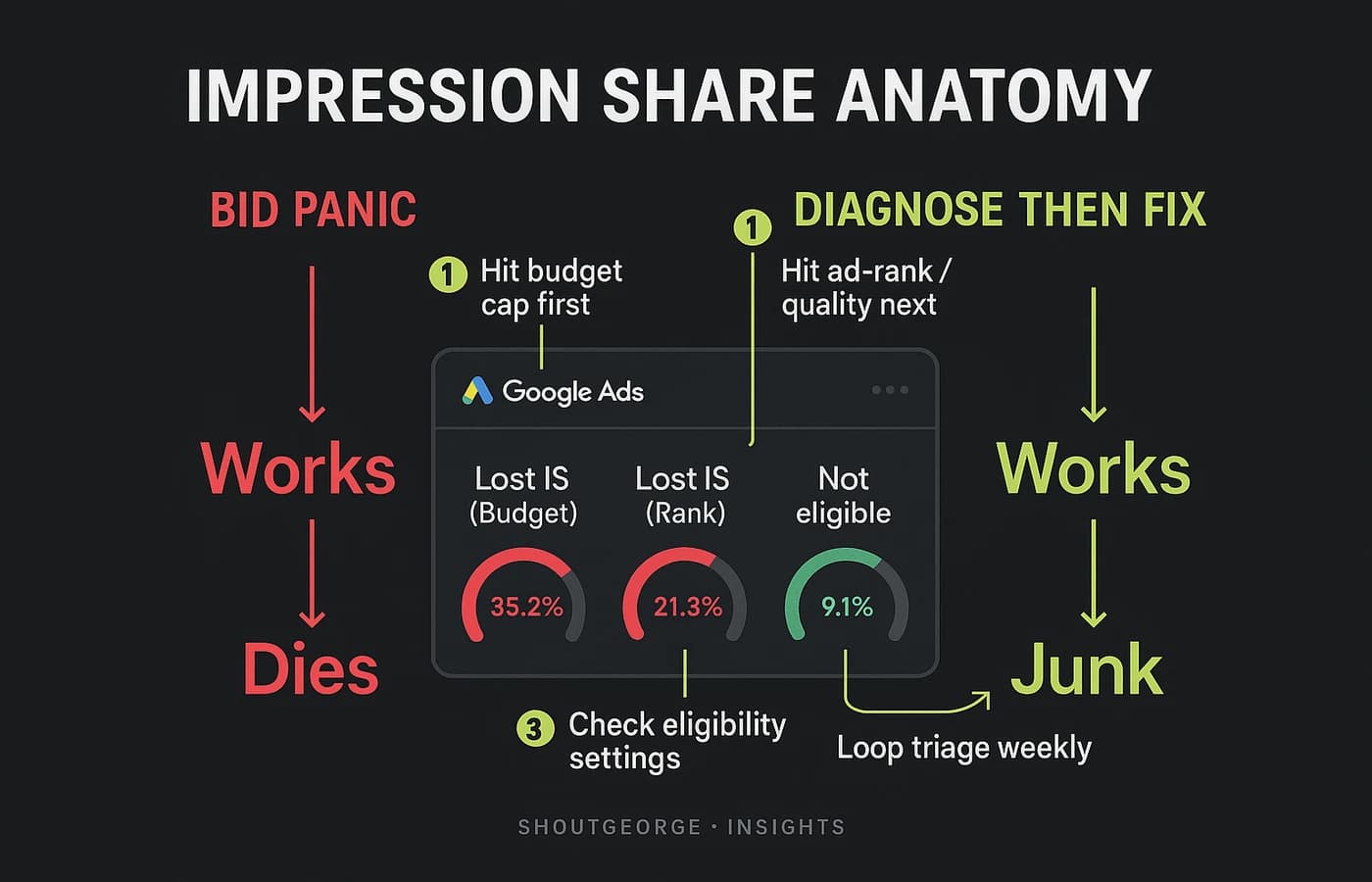
Expensive pattern
- Same query across three campaigns
- Too few keywords — or only vague ones
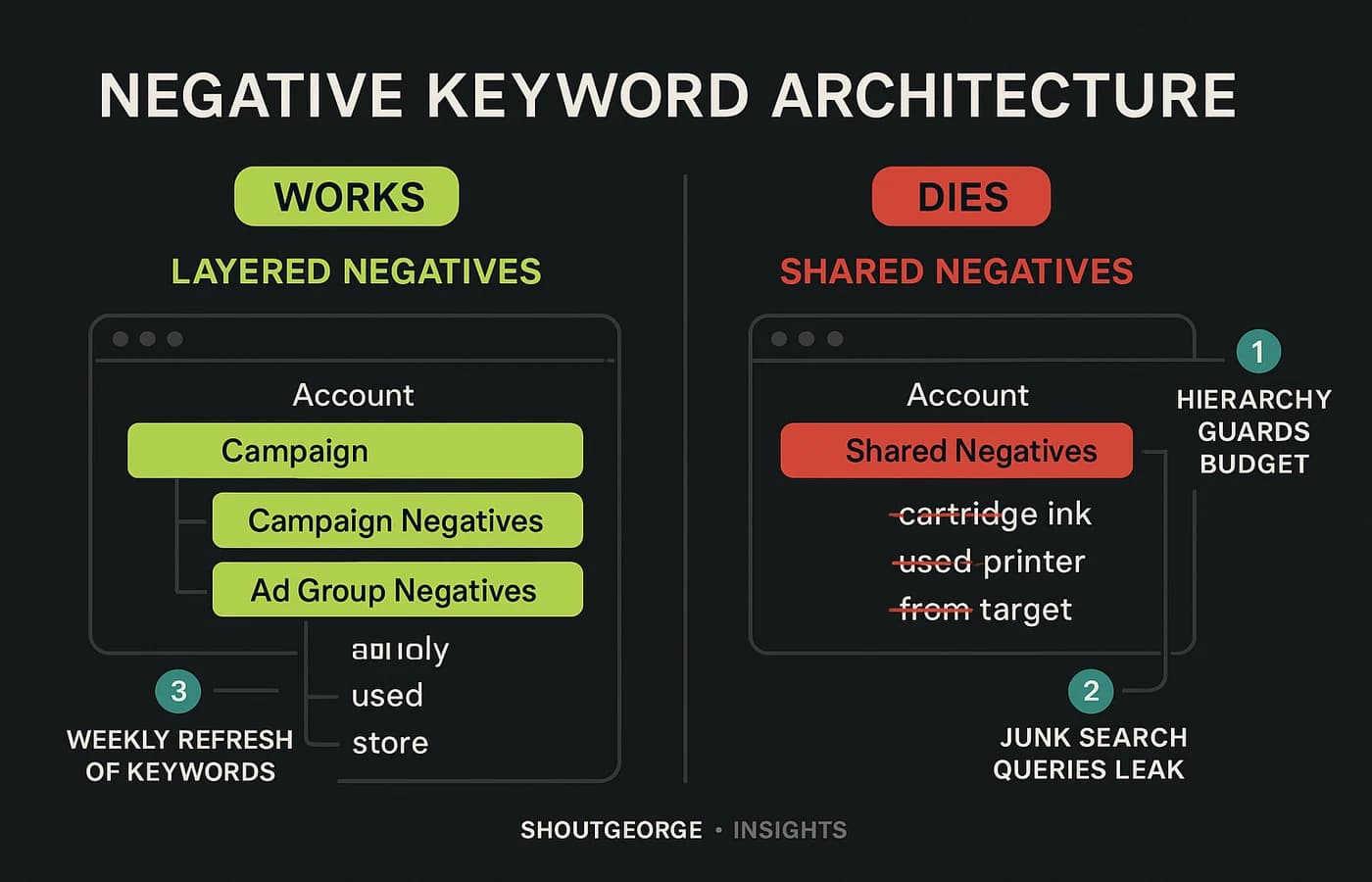
- Negatives too aggressive or missing the real junk
- RSAs / asset groups half empty; homepage for every ad
- Intake: “these aren’t buyers”
Bad structure doesn’t just look messy — it buys the wrong people. Here’s the operator meat under the diagram: coverage, negatives, RSAs, landing pages, and targeting.
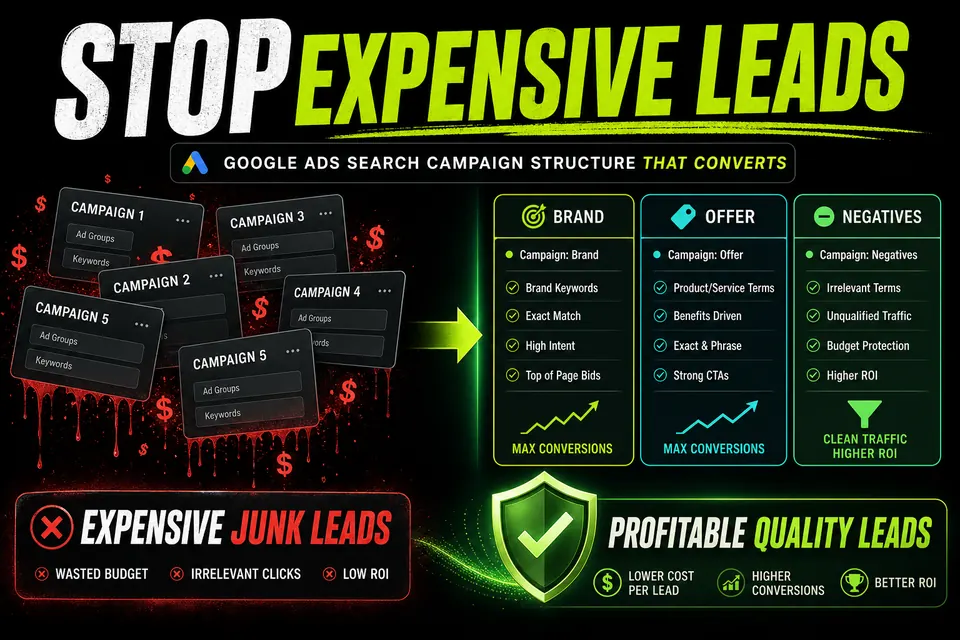
Clean boxes on a slide deck don’t save an account. Thin keyword coverage, generic landing pages, half-built RSAs, and sloppy negatives still buy the wrong people — just with prettier campaign names.
Not enough keywords — operators under-cover real demand, then wonder why volume sits with competitors. Expand from search terms that already convert; don’t invent fluff.
Generic keywords — bare terms like “lawyer” or “software” without intent modifiers pull browsers and tire-kickers. Pair modifiers to how buyers actually search.
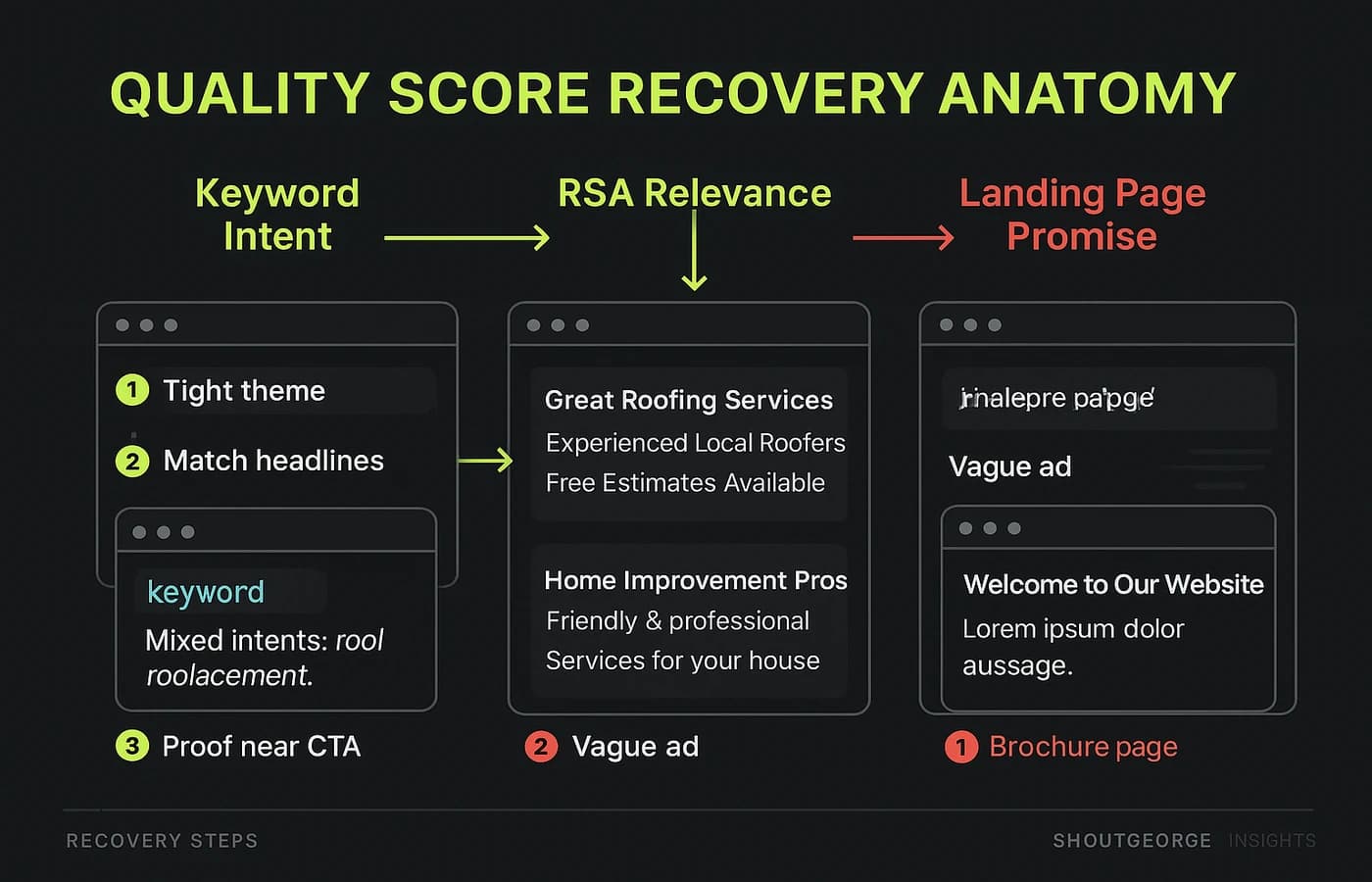
Generic landing pages — one homepage for every ad group kills message match. Each theme needs a page that finishes the ad’s sentence.
Bad negatives — too aggressive and you starve volume; too loose (or the wrong list) and you keep buying DIY, jobs, and freebie queries. Update from live search terms.
Half-filled RSAs / asset groups — thin assets = thin relevance. Fill headlines and descriptions with honest benefits, offers, and proof pins. See Google’s responsive search ads overview.
Poor targeting — loose geos and “everyone” audiences teach Smart Bidding to chase cheap, wrong clicks. Tighten to where sales actually closes.
Messy structure doesn’t just look bad — it buys the wrong people.
Expensive pattern
Healthy pattern
Want a faster gut check on ad-to-page leaks? Take the Ads Eye Challenge.
Campaigns should map to commercial intent themes: core service, brand, competitor conquest only if economics work, and geo splits when bids and messaging truly differ. Pretty folders that don’t match how people search still leak money.
Most “structure problems” are coverage and match problems wearing a neat campaign name. These are the failures I see in live accounts — not theory:
Beyond the classic six, these show up in almost every audit once match types loosened and automation got louder:
Start with search terms: expand coverage where real buyers show up, cut or negative the junk, and fill every RSA pin you can honestly support — with distinct themes, not copy-paste variants. Then align each ad group to one converting page — not a generic homepage.
Targeting next: tighten geos and audiences to where sales actually closes. Isolate brand. Turn auto-apply off and review negatives when you add new keywords. Structure is a container; these levers are what fill it with the right people.
PMax can complement Search. It should not silently cannibalize brand or paper over broken measurement. Dirty conversions + PMax = expensive noise with better creative reach. Claim your top converting search terms in Search first so PMax isn’t the default auction winner for queries you already know how to convert.
Fill RSA assets honestly — Google’s overview of responsive search ads is the baseline. Then send each theme to a converting Google Ads landing page, not a generic homepage.
Send the vertical, markets, and approximate monthly Search spend — I’ll tell you if structure, tracking, or the offer is the real bottleneck.