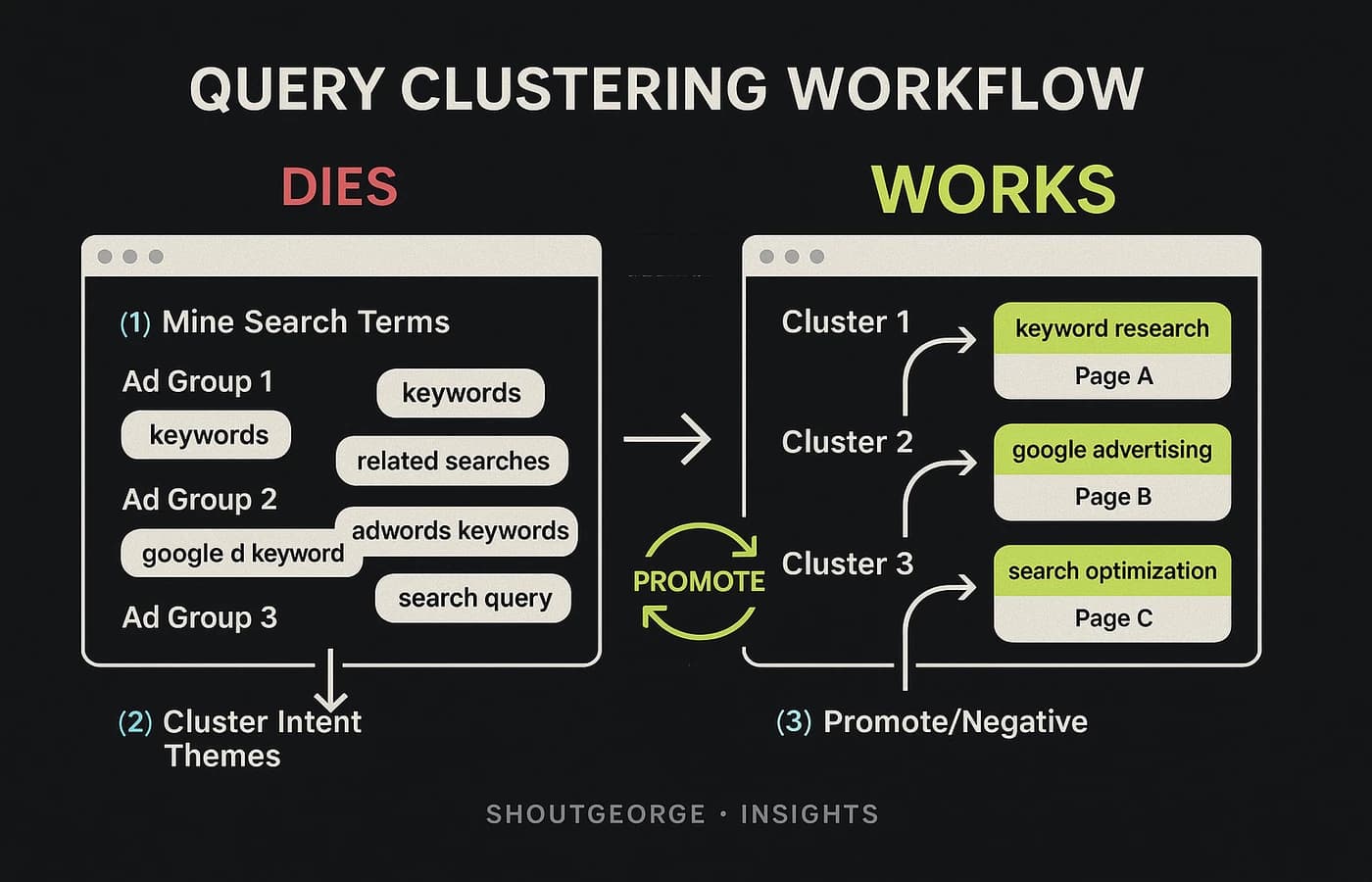
Raw terms are noisy without clustering
Reading individual terms in isolation leads to fragmented edits and mixed messaging. Clustering creates a reusable structure for decisions.
Clusters should reflect decision intent: compare, buy, emergency, location-specific, and similar buying contexts.
Cluster outputs should drive concrete assets
- Keyword and match-type ownership rules
- RSA angle sets aligned to cluster intent
- Landing section or page destination for each cluster
Use Search Console language as supplemental input
Search Console query phrasing can reveal informational-to-commercial bridges you may be under-covering in paid themes.
Import carefully: only promote phrasing that fits paid intent and qualified lead outcomes.
Operational cadence
- Refresh clusters weekly from new search terms
- Retire clusters with persistent low commercial fit
- Promote stable buyer clusters into dedicated structures
- Audit page routing whenever cluster language changes