Architecture beats one-off cleanup
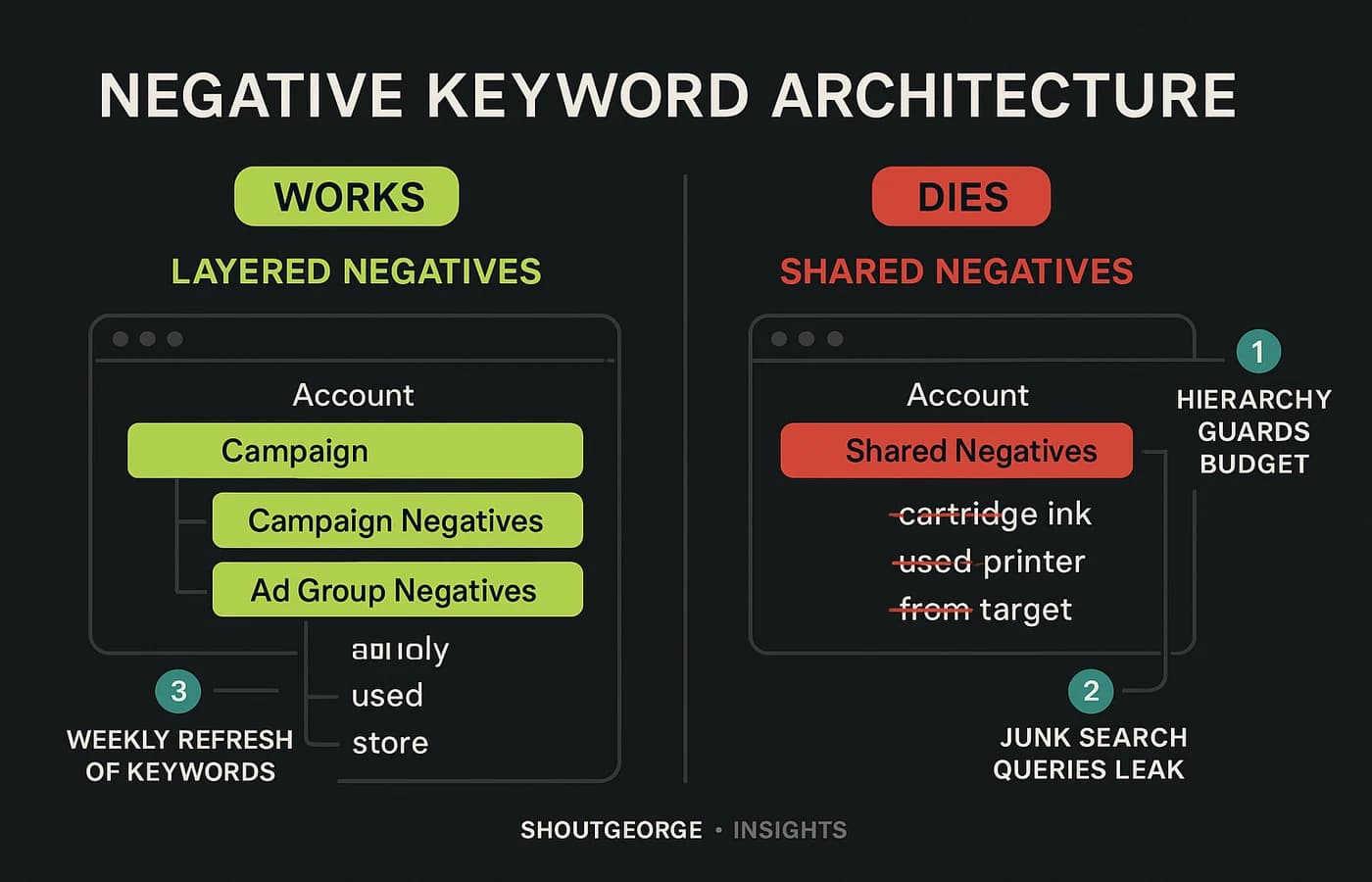
Adding negatives ad hoc inside random ad groups creates drift and blind spots. Junk terms return as soon as you launch new campaigns or expand match types.
A layered model keeps protection consistent while allowing deliberate exceptions.
Three layers that hold up operationally
- Account safety rails for universally non-commercial patterns
- Shared lists for recurring vertical noise and geography mismatches
- Campaign-level negatives for offer-specific exclusions
Avoid over-blocking winner paths
Over-aggressive shared lists can suppress useful long-tail buyer variants. Review conflict risk whenever new keyword themes are introduced.
When a term is ambiguous, test it in a controlled bucket instead of permanently blocking it everywhere.
Maintenance loop
- Mine search terms weekly and classify recurring junk families
- Promote repeat junk into durable shared lists
- Audit negative-to-keyword conflicts before large expansions
- Document exception logic so future edits do not break strategy