Optimization needs memory
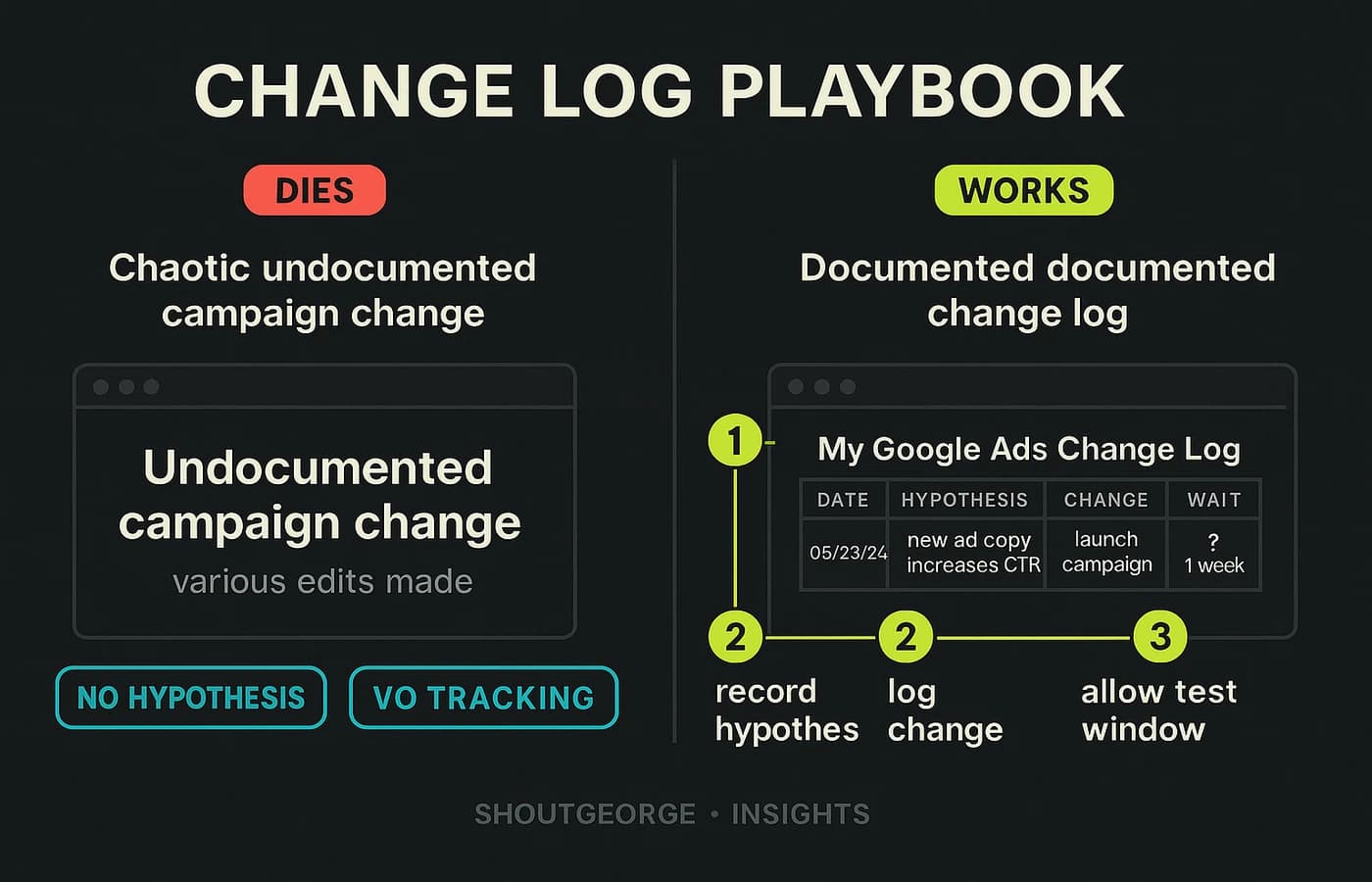
Change history in the platform is useful, but not enough context for decision quality. Operators need rationale, expected movement, and validation windows.
That context prevents repeated mistakes and helps teams hand off accounts cleanly.
Minimum log fields
- Hypothesis: what should improve and why
- Scope: campaigns, ad groups, assets, settings, or tracking touched
- Validation window: when to evaluate outcomes
- Rollback condition: what failure looks like
Separate strategic from reactive edits
Reactive changes for policy or outage issues should be tagged separately from planned optimization work.
This keeps reporting honest when evaluating whether a strategy update actually improved qualified outcomes.
Weekly operator review
- Review open hypotheses and due validation windows
- Close validated changes with result notes
- Rollback or revise failed hypotheses quickly
- Carry forward unresolved observations into the next sprint